
Low-Maintenance Landscape Zones With Permanent Material
Decorative Rock Features in Leawood for homeowners replacing high-maintenance planting beds with durable rock installations
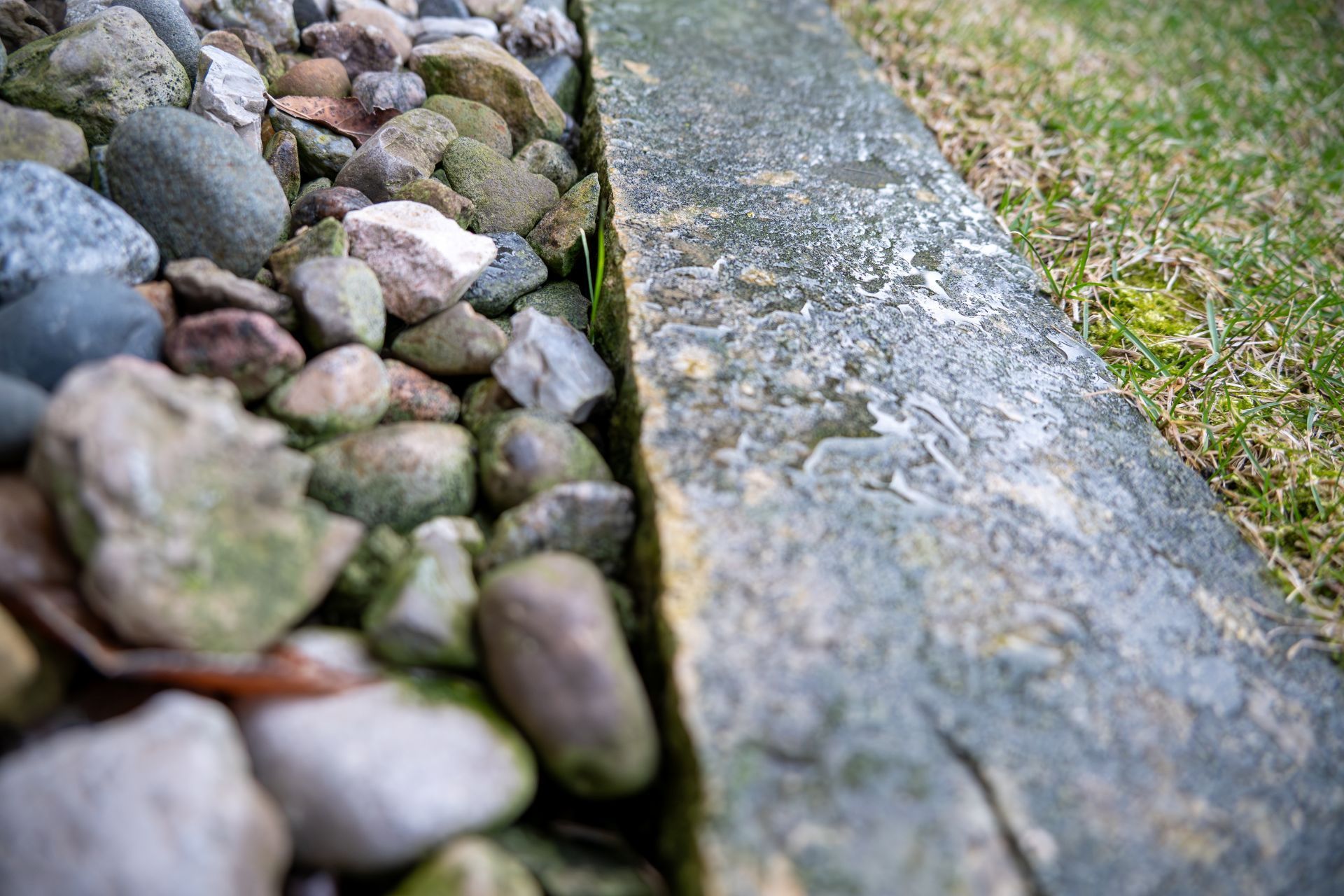
Decorative rock eliminates the need for seasonal mulch replacement and reduces weed growth in landscape beds while creating strong color and texture contrast against turf and plantings. Blue Fox Curb Appeal installs rock features throughout the Kansas City Metro Area with decorative curbing borders that separate stone from lawn and prevent migration during rain. Rock stays contained within bordered zones, and the combination of concrete edging and stone surfaces produces a finished appearance that requires minimal upkeep compared to organic mulch beds.
Rock installations work around existing trees, wrap flower bed perimeters, and frame walkways or patio edges where a clean transition between hardscape and landscaping is needed. Curbing is poured first to form the boundary, then landscape fabric is laid inside the bordered area before rock is spread to block weed growth and allow water to drain through to the soil below.
Schedule a consultation to review rock types and layout options for your landscape beds and outdoor spaces.
Why Rock and Curbing Work Together
Decorative rock is available in sizes ranging from small pea gravel to larger river rock, with color options including earth tones, gray blends, and white stone that contrasts sharply with darker curbing finishes. The raised concrete border keeps rock from scattering onto adjacent turf during storms and provides a mowing edge that prevents rocks from being thrown by lawn equipment. Landscape fabric underneath the rock layer blocks weed seeds from reaching soil while allowing rainwater to pass through and drain naturally.
After installation, you'll notice a cleaner landscape appearance with fewer weeds pushing through compared to mulched areas, and there's no need to rake or replenish material annually. The rock surface stays level and in place, and curbing maintains the visual separation between stone zones and planted areas without shifting or degrading over time.
Rock depth and size are selected based on the intended use of the area—smaller gravel for tight spaces around plantings and larger stone for open beds or areas with higher visual impact. Curbing height is adjusted to contain the rock layer without creating a barrier that looks disproportionate to the surrounding landscape features.
Common Questions About Rock Installations
Property owners considering rock features often want to understand material longevity and how installations handle seasonal weather.
What size rock works best for landscape beds in the Kansas City Metro Area?
Medium river rock and three-quarter-inch gravel are commonly used because they stay in place during heavy rain and don't compact into a solid layer that blocks drainage. Smaller pea gravel works well in narrow beds or around plants, while larger decorative stone creates bold visual accents in open landscape zones.
How does decorative curbing keep rock contained?
The raised concrete border forms a physical barrier that stops rock from migrating onto turf or hardscape surfaces, even during storms with significant runoff. Curbing is poured at a height that matches the depth of the rock layer, so the stone sits level with the top edge and doesn't spill over.
What preparation is required before rock installation?
Soil is graded to ensure water drains away from structures, existing vegetation is removed, and landscape fabric is laid to cover the entire bordered area. Curbing is installed along bed edges and allowed to cure before rock is spread to avoid displacing or staining the fresh concrete.
How does rock compare to mulch for maintenance requirements?
Rock doesn't decompose or need annual replacement, and weeds have a harder time establishing in rock beds compared to organic mulch. Occasional blowing or rinsing removes dust and debris that accumulates on the stone surface, but the material itself remains stable and functional indefinitely.
Can rock be combined with plantings inside the same bed?
Rock installations work well around trees, shrubs, and ornamental grasses, with curbing used to separate the rock zone from adjacent planting areas or to encircle individual landscape features. The rock layer provides a clean backdrop that highlights plantings without competing visually.
Blue Fox Curb Appeal designs rock installations that integrate with decorative curbing to deliver low-maintenance landscape features built for long-term performance. Contact the team to arrange a site visit and discuss rock options for your property.